Pricing
Is It Worth Repairing a Washing Machine? Costs and Lifespan
Is it worth repairing a washing machine? What washer repairs cost in Atlanta, how long washers last, and when bearings or a pump tip the decision.
By Atlanta Appliance Techs · Published · Updated · 5 min read
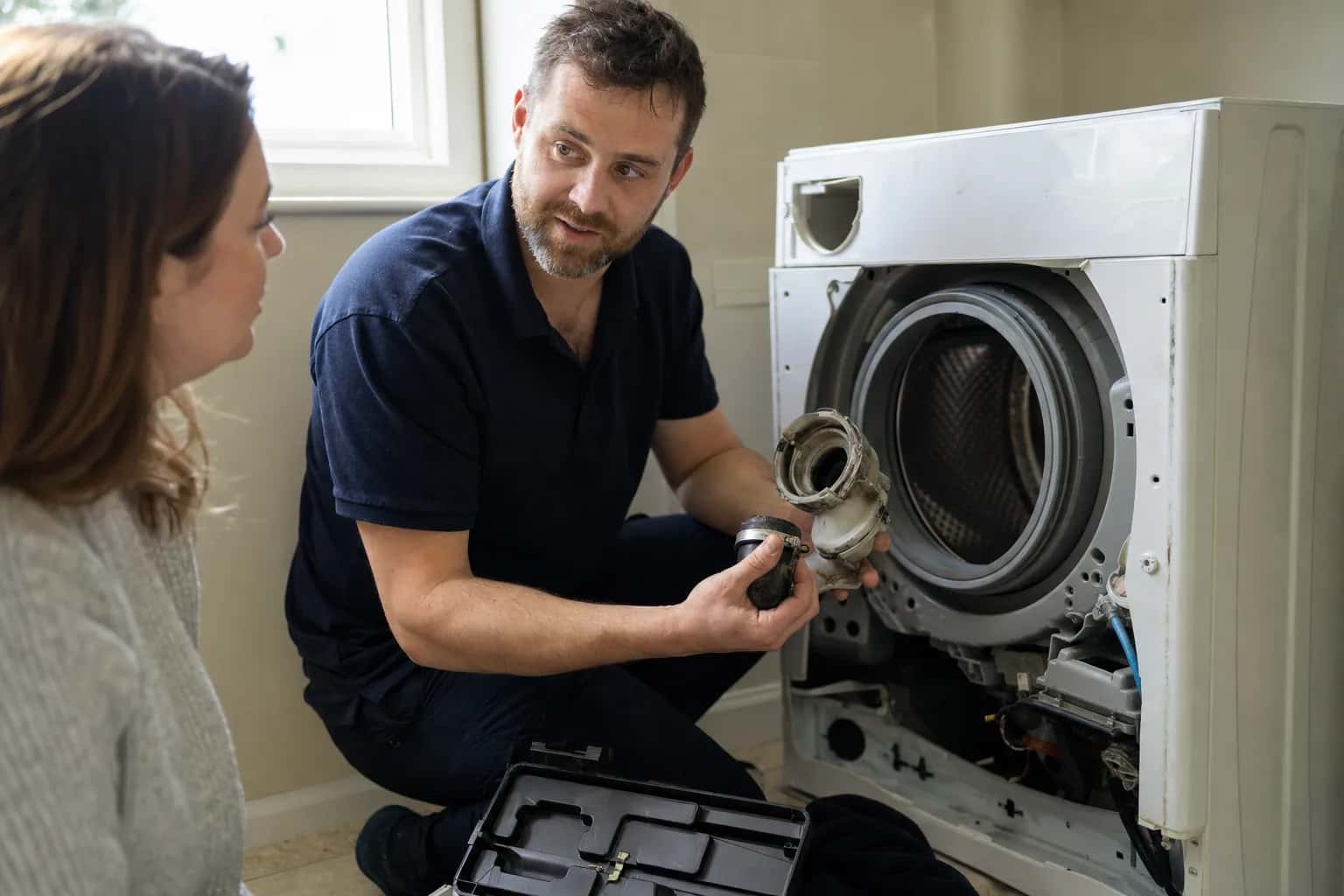
Is it worth repairing a washing machine? In most cases, yes. Most washer failures, such as a drain pump, door lock, lid switch, belt or inlet valve, cost $250 to $450 to repair, all in. The repairs that change the answer are worn tub bearings and a failed transmission, which can run past $500, especially on a front-load washer that is already well into its life.
When is it worth repairing a washing machine?
A common rule of thumb is the 50% rule: replace the washer if the repair costs more than half the price of a comparable new machine AND it is past the midpoint of its expected life. If only one of those is true, repair usually wins.
To use it, price a new washer like yours, with the same type, capacity and features, and compare it with the written quote. Then check the washer's age against its expected life, below.
How many years does a washer last?
InterNACHI's life-expectancy chart puts a washing machine at 5 to 15 years, assuming regular recommended maintenance and normal wear and tear. That is a wide range, so treat the midpoint, around 10 years, as a rough guide rather than a deadline. How a washer is treated matters: overloading, too much detergent and an unlevel machine all wear out the parts that are expensive to replace. For other appliances, see how long appliances last.
What washer repair costs in Atlanta
These are typical all-in ranges on standard brands, from our pricing page:
- $250 to $450: drain pumps, door locks, lid switches, belts and inlet valves.
- Over $500: tub bearings and transmissions can exceed it, and on an older machine they often start a replace conversation.
The diagnostic is $80 and is waived when you approve the repair. Washer repairs start at $180 plus parts, and you get a written flat-rate estimate before any work begins. The repair can be finished on the first visit when the part is in stock, and every repair carries our 60-day parts-and-labor warranty.
A failed drain pump: almost always worth fixing
A washer that leaves water in the drum, hums without draining or shows a drain code often has a clogged or failed drain pump. On a front-loader, unplug the washer and clean the pump filter first; a sock or a handful of coins is a free fix. If the filter is clear and the pump still will not move water, a new pump sits within that $250 to $450 range. Our guide to a washer not draining or spinning walks through the checks.
Worn bearings: the repair that often means replace
Tub bearings let the drum spin smoothly. When they wear, you hear a rumble or roar during the spin that grows louder over the weeks. On a front-load washer, replacing them means splitting the tub apart, and the job can exceed $500, a large share of a new washer's price. On an older front-loader, replacing the washer usually makes more sense. A top-loader with a failed transmission is a similar conversation.
A technician confirms it by rocking the drum by hand with the washer off; play or a clunk points to the bearings. The roar often follows a leaking tub seal, which is why the seal and bearings are replaced together.
Not every loud spin means bearings. Banging and walking across the floor usually come from worn suspension parts or an unbalanced load, which are far less expensive to fix; see washer shaking violently.
Other repairs that are usually worth it
- Door lock or lid switch. The washer will not start or spin, or the door stays locked; see washer door won't unlock.
- Inlet valve. The washer fills slowly or not at all; see washer not filling with water.
- Belt, motor coupling or shift actuator. The motor runs but the drum barely turns, or the washer washes but never spins.
- Door boot or pump seal. Water on the floor after a cycle; see washer leaking from the bottom.
- Control board. Usually worth it on a newer washer, and we confirm a board has failed with tests before replacing it.
If you are unsure which of these you are looking at, our page on what a washer repair visit includes explains the process: a diagnosis first, then a written price for the repair.
Front-load vs top-load
Front-load washers are efficient, and their door boots and seals need care to stay dry and odor-free; see washer smells like mildew. That does not make a front-loader a bad repair. Pumps, door locks and boots are routine fixes. Bearings are the exception.
If you do replace, efficiency is a real benefit. ENERGY STAR says certified washers use about 20% less energy and about 30% less water than regular washers.
A simple decision list
This is a rule of thumb, not a formula; the 50% math above decides the close calls.
- Under 4 years old: repair almost anything, and check the warranty first.
- 4 to 8 years: repair pumps, locks, switches, belts, valves and boards. For bearings or a transmission, run the 50% math.
- Over 8 years: repair the less expensive failures if the washer otherwise runs well. Bearings on a front-loader usually mean replace.
- 12 years and up: an inexpensive repair can still buy time, but a second major failure is the sign to replace.
The hidden costs of replacing
A new washer means delivery, installation and haul-away. A proper installation includes new braided stainless supply hoses, leveling and, on front-loaders, removing the shipping bolts. LG warns that running a washer without removing the shipping bolts and retainers may cause severe vibration and noise that can lead to permanent damage. Stacked units in closets take more work to swap, and a newer washer carries more electronics. If you replace, we can install the new one.
Make the next one last
- Leave a front-load door open between loads so the drum and seal can dry.
- Clean the front-load pump filter at least once a month, or about every 40 washes, as Samsung recommends for its washers.
- Use HE detergent, measured to the detergent maker's directions for your load.
- Keep the washer level, and do not overload it.
- Replace rubber fill hoses every five years, as Whirlpool recommends; braided stainless is a cheap upgrade.
For the same rule across every appliance, see our repair-or-replace guide.
Schedule a visit or read about our washer repair service. Prefer to talk? Call (470) 778-4087.
Sources
- InterNACHI: Standard estimated life expectancy chart for homes
- ENERGY STAR: Clothes washers
- LG: Troubleshooting vibration issues
- Whirlpool: Checking the fill hoses if the washer is not filling
- Samsung: How to clean your Samsung washer
How we write and check these guides: editorial policy. Spot an error? Email hello@atlantaappliancetechs.com.
About Atlanta Appliance Techs
Atlanta Appliance Techs is a locally owned appliance repair company serving Metro Atlanta, including washer repair in Atlanta. $80 diagnostic waived with the repair, 60-day parts-and-labor warranty, and gas, electric and induction appliances. More about us.