Washers
Washer Smells Like Mildew, Rotten Eggs or Sewer? How to Fix It
Washer smells like mildew, rotten eggs or sewer? Where a musty front load washer smell starts, how to clean it out, and when the problem is your plumbing.
By Atlanta Appliance Techs · Published · Updated · 6 min read
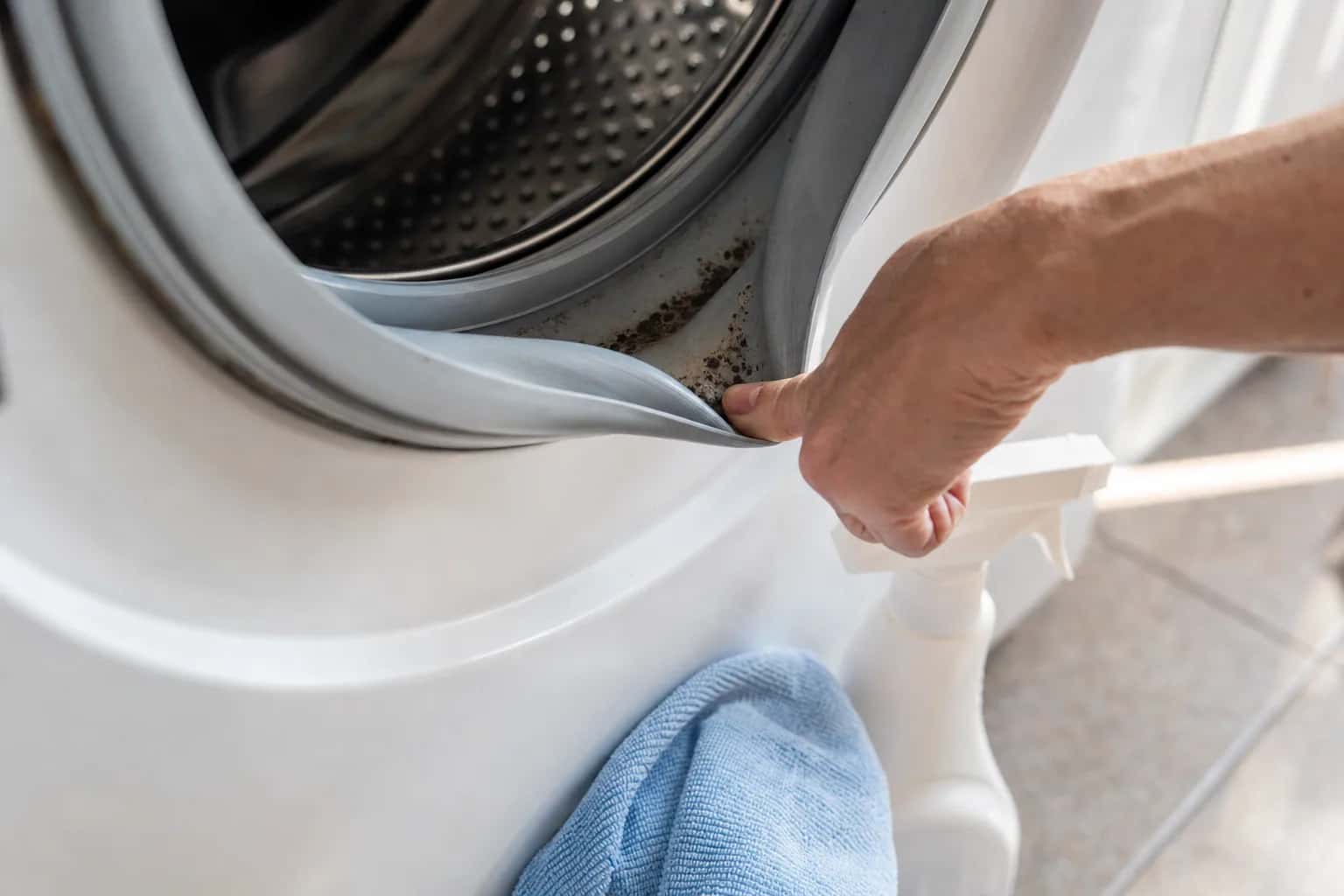
A washer smells musty or like mildew when water and detergent residue sit where they cannot dry: the door gasket, the drain pump filter, the detergent drawer or the outside of the tub. A monthly clean-out and a door left open between loads fix most of these. A rotten egg or sewer smell is a different problem, and it is often your water, your drain hose or your plumbing rather than the washer.
Safety first: natural gas is odorless, so gas companies add mercaptan, which smells like rotten eggs, according to the U.S. Energy Information Administration. If the smell could be gas, for example near a gas dryer or gas water heater, do not touch light switches or light anything; leave the house and call the gas utility or 911 from outside. Unplug the washer before you open the pump filter or reach behind it.
Why your washer smells: checks you can do yourself
- Wipe the door gasket. On a front-loader, pull back the folds of the rubber seal, especially at the bottom, and remove hair, lint, coins and slime. LG recommends wiping it with an oxygen-based bleach and leaving the door open to dry.
- Clean the drain pump filter. LG says a clogged filter leaves water in the drum, which leads to odor over time. With the washer unplugged, put down towels and a shallow pan, drain the water through the small tube if there is one, then unscrew the filter and clean it.
- Clean the filter on a schedule. Samsung suggests cleaning its front-load pump filter at least once a month or about every 40 washes, whichever comes first.
- Pull and wash the detergent drawer. Whirlpool says to remove and clean it regularly, following your owner's manual. Wipe out the housing it slides into as well.
- Run a cleaning cycle (see below).
- Dry it after each load. Samsung says to wipe out the detergent drawer, tub and door seal with a clean, dry cloth after you take the clothes out, and to leave the door open.
- Take wet clothes out promptly. Whirlpool says wet clothing left in the basket can lead to mildew, which causes odors in both the clothes and the washer.
Musty or mildew smell in a front load washer
Front-loaders get the worst of it because the door seals tight and the rubber boot holds a little water in its folds. Samsung says moisture or leftover detergent trapped in a dark place can promote mold and mildew, and that the rubber door seal on a front-loader is especially good at trapping moisture. Top-loaders can smell musty too, usually from residue on the tub and in the drawer.
Too much detergent makes it worse. Modern washers use little water, and detergent that does not rinse away leaves a film for mildew to grow on. Whirlpool says to use only HE detergent and never more than the manufacturer recommends.
Samsung adds that you should not fill past the MAX line in the detergent drawer, and that skipping HE detergent causes excessive buildup.
Water temperature plays a part. LG notes that in cold water, detergent may not fully dissolve, which can lead to buildup and odor.
How to run a tub-clean cycle
Each brand names the cycle differently, and the steps vary by model, so follow your owner's manual and start with an empty drum. Here is what three brands say:
- Whirlpool: run the Clean Washer cycle every month with affresh washer cleaner or liquid chlorine bleach. Do not use thickened, easy-pour or no-splash bleach, which can cause excess suds.
- Samsung: for a mildew smell, empty the tub and run a Spin-only cycle. Then pour liquid chlorine bleach into the detergent compartment up to the MAX line (not the bleach compartment) and start Self Clean, Self Clean+ or Pure Cycle right away. It takes about an hour on top-loaders and about four hours on front-loaders. Samsung's mildew guide then calls for a Rinse+Spin and leaving the door and drawer open to dry.
- LG: run Tub Clean once a month with a washer tub cleaner to keep odor from forming. For a top-loader that already smells, LG's odor guide calls for three Tub Clean cycles back to back with a washing machine cleaner, then drying the tub with the lid open, then Tub Clean at least once a week until the odor is gone.
Use one product at a time. The CDC warns that household chlorine bleach can release chlorine gas if it is mixed with certain other cleaning products, so never combine bleach with another cleaner.
Leave the door ajar
A closed front-loader stays damp inside for a long time, and a warm, humid laundry room slows the drying even more. Whirlpool recommends leaving the door open between loads to help avoid a buildup of odor-causing residue. Leave the detergent drawer open a little too. If you have small children or pets, keep the laundry room door closed while the washer is open. Our Atlanta humidity maintenance checklist covers the rest of the house.
Washer smells like rotten eggs
A sulfur or rotten egg smell has a few likely sources, and the fix depends on which one it is:
- The washer itself. Standing water in the pump filter or the bottom of the door seal can go foul. The cleaning steps above fix it.
- Your water. Run the hot tap at a sink. If the hot water smells the same, the washer is not the cause. The Connecticut Department of Public Health notes that a rotten egg odor only in hot water may come from a reaction with the magnesium rod in the water heater, and that private wells can carry hydrogen sulfide in the water itself. That is a job for a plumber or a water-treatment company.
- The drain hose. Samsung says a sulfur or sewage smell can mean the drain hose is pushed too far down the standpipe and drained water is siphoning back into the washer. Its hose should go no more than eight inches into the drain.
- Gas. See the safety note above. If you smell gas, get out first and ask questions later.
Sewer smell in the laundry room
A true sewer smell that lingers in the room, not just in the washer, usually comes from the plumbing. The standpipe your drain hose empties into has a trap, a bend that holds water to block sewer gas. When a drain is not used for a while, the water in the trap can evaporate and let the gas through. If the washer has sat unused, run a short rinse cycle to refill the trap.
If the smell keeps coming back after that, the trap or the drain's vent may be damaged or blocked, and that is a job for a licensed plumber. While you are behind the washer, make sure the drain hose is not sealed or taped into the standpipe; an airtight connection can siphon dirty water back into the drum.
Burning smell: stop the washer
A burning, hot plastic or electrical smell is not a cleaning problem. Stop the cycle, unplug the washer or switch off its breaker, and call for service; a motor, pump, belt or wiring connection may be overheating. If you see smoke or flames, get everyone out and call 911 from outside, as Ready.gov advises.
What usually fails
- Door boot. A torn seal, or one with mold that will not clean up, gets replaced.
- Drain pump or filter housing. Water that never fully drains sits in the washer and sours; see washer not draining or spinning.
- Drain hose or internal hose. A kink or clog holds standing water.
- Motor, pump or belt. The usual sources of a burning smell.
If the boot is torn or the mold has set into the rubber, a technician can replace the door boot so the smell does not come straight back. If you also find water on the floor, see washer leaking from the bottom.
What it costs in Atlanta
The diagnostic is $80, and it is waived when you approve the repair. Washer repairs start at $180 plus parts, and a typical washer repair on a standard brand runs $250 to $450 all in, with premium brands higher. You get a written flat-rate estimate before any work begins, the repair can be finished on the first visit when the part is in stock, and every repair carries our 60-day parts-and-labor warranty. See our pricing.
Schedule a visit or read about our washer repair service. Prefer to talk? Call (470) 778-4087.
Sources
- Samsung: Samsung washing machine or laundry smells bad
- Samsung: Samsung washing machine has a mildew smell or visible mold
- LG: Troubleshooting odor buildup
- Whirlpool: Removing odors or smells, front load washer
- U.S. Energy Information Administration: Natural gas explained
- CDC: Chlorine chemical fact sheet
How we write and check these guides: editorial policy. Spot an error? Email hello@atlantaappliancetechs.com.
About Atlanta Appliance Techs
Atlanta Appliance Techs is a locally owned appliance repair company serving Metro Atlanta, including washer repair in Atlanta. $80 diagnostic waived with the repair, 60-day parts-and-labor warranty, and gas, electric and induction appliances. More about us.