Dryers
Dryer Takes Forever to Dry? Why It Needs Two Cycles
Dryer takes forever to dry, or needs two cycles? The usual causes, from a clogged vent to a weak heater, what you can check yourself, and what repair costs.
By Atlanta Appliance Techs · Published · Updated · 7 min read
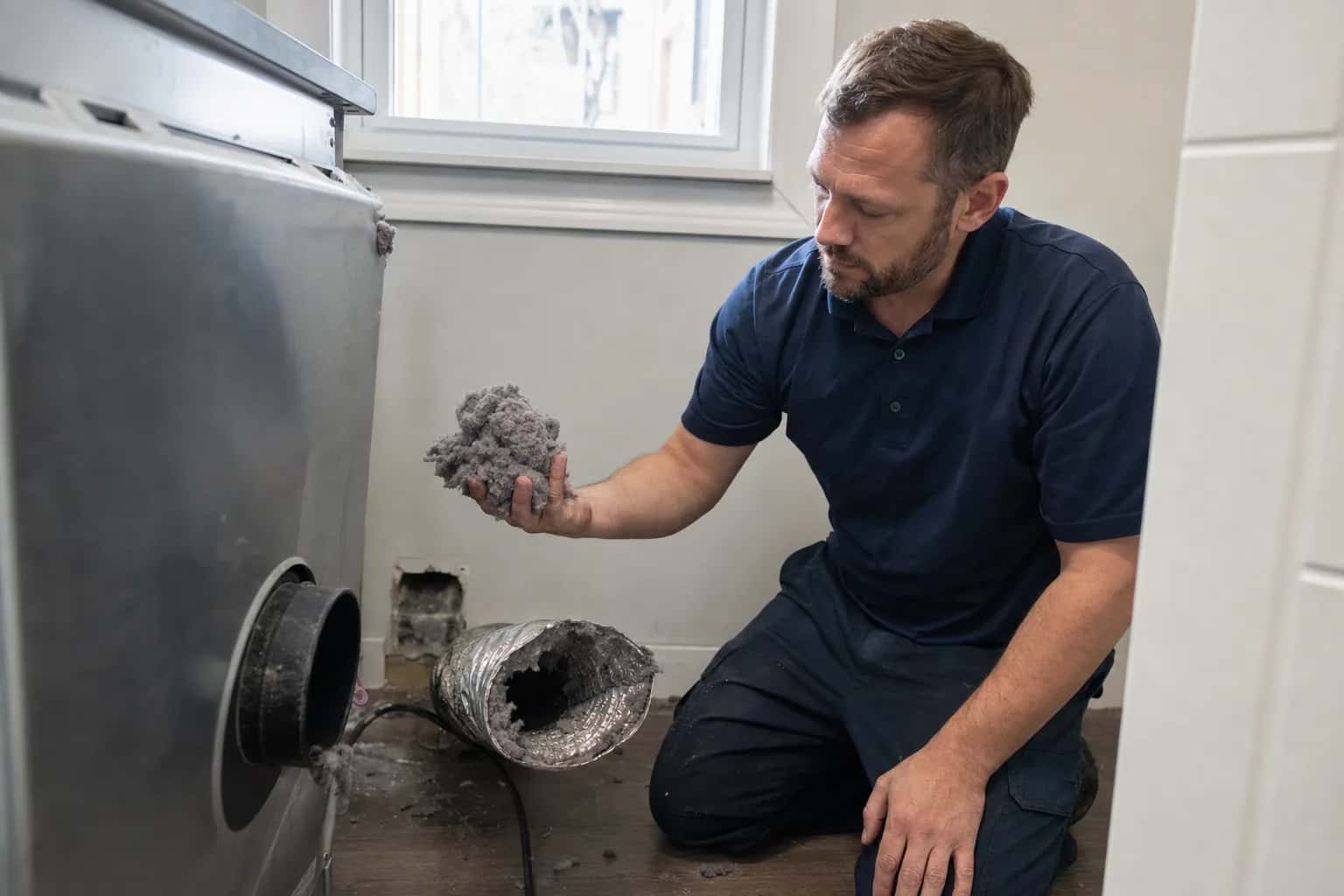
If your dryer takes forever to dry, needing two cycles for a normal load or running two hours with the clothes still damp, it is usually short on airflow rather than broken. Wet air has to leave the drum for clothes to dry, and anything that slows it down, from a coated lint screen to a clogged vent cap, stretches the cycle. Most of the causes are inexpensive, and several you can fix yourself this afternoon.
If the drum tumbles but you feel no heat at all, that is a different problem, covered in dryer not heating: the common causes. This guide is for the dryer that heats, just not well enough.
A dryer that takes forever to dry is a fire warning
A clogged vent traps lint, and a dryer that cannot exhaust runs hot. According to the U.S. Fire Administration, failure to clean was the leading factor contributing to home clothes dryer fires from 2018 to 2020, at 31%.
The CPSC lists clothes that are still damp after a typical cycle, or drying that takes longer than normal, as signs that the lint screen or exhaust duct may be blocked. If the top of the dryer is hot to the touch, the laundry room turns hot and humid while it runs, or you smell something burning, stop using the dryer until it has been checked.
Checks you can do yourself
Unplug the dryer, or switch off its breaker, before you reach inside it or pull it away from the wall. Electric dryers run on 240 volts.
- Clean the lint screen, then wash it. Roll the lint off before every load. Whirlpool says detergent and fabric softener residue can build up on the screen and cause longer drying times, and recommends scrubbing it with a nylon brush, hot water and liquid detergent every six months or more often if it clogs, then drying it before it goes back in.
- Right-size the load. An overstuffed drum cannot tumble or move air. Whirlpool's guidance is to fill the drum no more than about three-quarters full, and to dry heavy towels separately from light clothes. Very small loads tumble poorly too, so add a few similar items to a tiny load.
- Check the cycle and options. Air-only and fluff settings add no heat, and energy-saving options lengthen the cycle on purpose. On Whirlpool dryers with the EcoBoost option, the Whirlpool help page on long dry times says it adds about 40 minutes.
- Clean the moisture sensor bars. Samsung describes them as two curved metal bars inside the front of the drum, near the lint filter housing, and recommends wiping them with a soft cloth and a drop of dish soap. Dryer-sheet residue coats them, and a coated sensor misreads the load.
- Check air at the outside vent. While the dryer runs, go outside and make sure the vent flap opens and warm, moist air is actually coming out. If the vent exits through the roof, do not climb up to check it; leave that one to a professional.
- Look behind the dryer. With the dryer unplugged, pull it out and check the duct between the dryer and the wall. Thin foil or plastic ducting crushes easily when the dryer is pushed back. Replace it with 4-inch rigid or semi-rigid metal duct, and clear the lint from both connections.
- Test for heat. Run the empty dryer on a heated timed cycle for five minutes, then open the door and feel inside. If it is warm, the heat source is working and the problem is almost certainly airflow.
Dryer takes two cycles to dry
When everything in the laundry room checks out and the dryer still needs two cycles, suspect the vent run inside the walls, attic or roof. Whirlpool says venting should be as straight and short as possible, because added length and elbows reduce airflow and encourage lint buildup, and that the outside venting must be cleaned every one to two years, or sooner when drying slows down.
A vent that runs up through an attic and out the roof, far from the laundry room and with several elbows, collects lint faster, and lint piles up where the air slows at the cap. Birds and rodents also nest in vents. A vent can simply be too long for the dryer, too: manufacturers publish a maximum length and number of elbows in the installation instructions. Some Whirlpool dryers can alert you with an error code when there is a problem with the vent.
Cleaning the full duct run is a job for a dryer vent cleaning professional. Every dryer repair includes an airflow check at the machine, and if the duct is the problem, we will tell you and recommend one; we do not clean duct runs ourselves.
Dryer not drying clothes all the way
If an automatic cycle ends with seams, pockets and towels still damp, the dryer thinks the load is dry when it is not. The usual reasons:
- Moisture sensor bars coated with dryer-sheet residue (check 4 above).
- A dryer that is not level, so the clothes do not tumble against the sensor bars. GE says the dryer needs to be level so clothes tumble properly and contact the moisture sensors.
- Mixed loads, where light shirts dry quickly and end the cycle while the jeans and towels are still wet.
- A dryness setting turned down to less dry, or an Eco Dry option, which GE notes may leave clothes slightly damp.
Try a timed cycle on a full load. If a timed cycle dries the clothes and the automatic cycle does not, the sensor or its circuit is the likely cause.
Dryer takes 2 hours to dry? Check the washer and the power
Sometimes the dryer is fine, and drying takes too long because the washer is handing it soaking-wet clothes. Squeeze a towel right after the final spin: it should feel damp, not dripping. GE notes that a higher spin speed or an extended spin removes more water and shortens drying time. If the towel drips, or water is left in the tub, the washer is not spinning properly; see washer not draining or spinning.
Power matters too. GE says an electric dryer on a 120-volt circuit instead of 240 volts can take as much as three times longer to dry. That usually means a breaker problem or a lost leg of the supply, covered in the dryer not heating guide.
What usually fails
- The vent. Not a part, but the most likely cause of long dry times, and the reason several parts below wear out.
- Heating element. An element that is failing, or one with a burned terminal, can heat on and off, leaving the dryer warm but never hot.
- Cycling thermostat. It switches the heat on and off to hold the drum temperature. One that opens too early keeps the dryer running cool.
- Moisture sensor or control. Ends automatic cycles early and leaves clothes damp, even after the sensor bars are cleaned.
- Blower wheel. Lint wrapped around the blower, or a cracked blower wheel, cuts airflow from inside the dryer.
- High-limit thermostat and thermal fuse. Safety devices that trip when the dryer overheats, usually because of restricted airflow. Replacing them without fixing the vent means they trip again.
If the vent is clear and the dryer still runs warm instead of hot, book a technician to test the element and thermostats with a meter before any parts are ordered.
A gas dryer runs slow for the same airflow reasons, and a weak igniter or gas valve coils that cut out mid-cycle can leave it warm instead of hot; see gas dryer not heating. We repair gas and electric dryers.
What dryer repair costs in Atlanta
The diagnostic is $80 and is waived when you approve the repair. Dryer repairs start at $180 labor plus parts, and typical dryer repairs on standard brands run $230 to $380 all in. You get a written flat-rate estimate before any work begins. Many repairs can be finished on the first visit, and if a part has to be ordered, there is no trip charge for the return visit. Every repair carries our 60-day parts-and-labor warranty. See our pricing for the details.
Keep it drying fast
- Clean the lint screen before every load, and wash it at least every six months, or more often if you use dryer sheets or fabric softener.
- Have the vent cleaned every one to two years, and more often if it is long or runs to the roof.
- Leave a few inches behind the dryer so the duct never gets crushed.
Schedule a visit or read about our dryer repair service. Prefer to talk? Call (470) 778-4087.
Sources
- U.S. Fire Administration: Appliance and electrical fire safety
- Whirlpool: Cleaning the Lint Screen on a Dryer
- Whirlpool: How to Check Venting
- GE Appliances: Dryer - Taking Too Long To Dry Clothes or Not Drying at All
- Samsung: Clothes are not dry after using Samsung dryer
- CPSC: Overheated Clothes Dryers Can Cause Fires (Safety Alert)
How we write and check these guides: editorial policy. Spot an error? Email hello@atlantaappliancetechs.com.
About Atlanta Appliance Techs
Atlanta Appliance Techs is a locally owned appliance repair company serving Metro Atlanta, including dryer repair in Atlanta. $80 diagnostic waived with the repair, 60-day parts-and-labor warranty, and gas, electric and induction appliances. More about us.