Refrigerators
Why Is My Fridge Freezing Everything? Causes and Fixes
Fridge freezing everything, from milk to lettuce? The right temperature, the checks to try first, the parts behind it when settings are fine, and repair costs.
By Atlanta Appliance Techs · Published · Updated · 5 min read
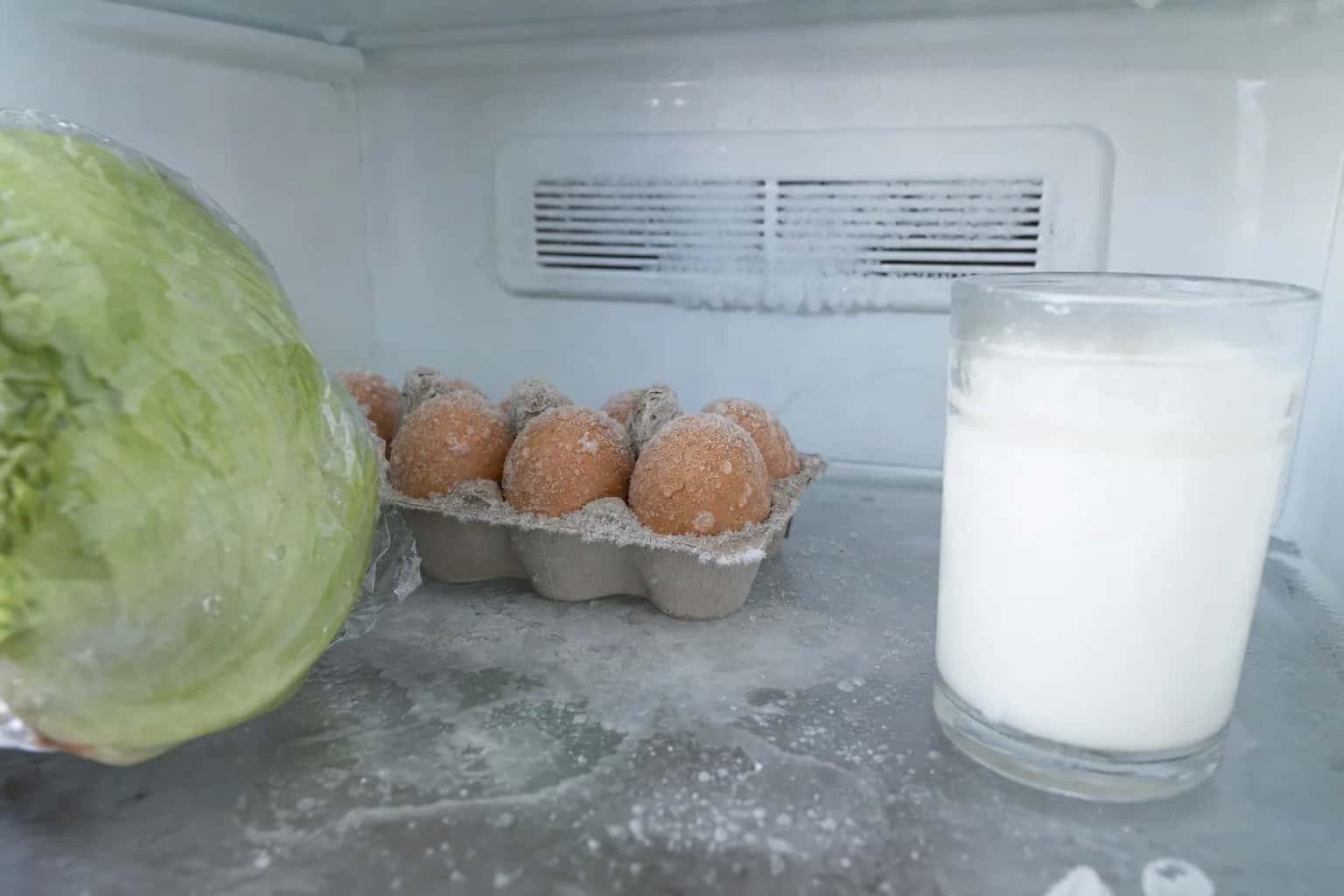
A fridge freezing everything, from lettuce to milk and eggs, is usually too cold because of its setting, or because food is blocking the vents that bring cold air in from the freezer. Both are free to fix. If food keeps freezing after you have ruled those out, a part is letting in too much cold air, usually a damper stuck open, a temperature sensor (thermistor) that reads wrong, or the control.
What temperature should a fridge be?
The FDA says to keep the refrigerator at or below 40°F and the freezer at 0°F, and recommends an appliance thermometer to check.
Whirlpool puts the ideal fresh-food temperature at about 37°F, the setting many refrigerators ship with, and calls 33°F to 40°F generally okay; colder than that, food may freeze. So the target is a narrow band: at or under 40°F for safety, but out of the low 30s. Around 37°F is the sweet spot.
Checks you can do yourself
- Measure the real temperature. Put an appliance thermometer on a middle shelf, or use Whirlpool's method: leave a glass of water on the top shelf for 24 hours, then check it with a cooking thermometer. If it is more than 2 degrees off the set temperature, the sensor may be faulty.
- Check the setting. Displays and dials get bumped during cleaning. Set the fridge to 37°F, or to the middle setting on a dial; the numbers on a dial are not degrees, and your owner's manual explains the scale. Wait at least 24 hours between adjustments.
- Turn off any boost mode. Samsung's Power Cool, for example, runs the fridge compartment at maximum cooling; it turns itself off after a while, but you can switch it off sooner. Other brands have similar quick-chill settings.
- Clear the vents. Cold air enters the fresh-food section through vents, usually on the back wall. Samsung recommends keeping food 2 inches clear of them at all times.
- Move the food that freezes easily. Whirlpool warns that eggs and liquids placed directly in the airflow may freeze. Keep high-water foods such as meat, fruit and vegetables in their drawers rather than at the back or in front of a vent.
- Turn off the ice maker if you have no water line. Whirlpool notes that an ice maker left on without water keeps trying to make ice, which can cool the compartment to freezing temperatures. Our ice maker guide covers how to switch it off.
- Check the door gaskets. Whirlpool lists a leaking door seal among the causes of a fridge that freezes food, because the refrigerator works harder to hold its temperature. Clean the gaskets and look for tears.
Why is my fridge freezing food in the back?
That is the vents at work. Whirlpool explains that blocked vents push cold air in at the back of the fridge, so food sitting directly in that path gets frosty.
Samsung's guidance agrees on where the cold is: the back, the bottom and the area in front of the vents are the coldest places in the fridge. If only the food at the back freezes, keep it a few inches off the vent and spread the rest of the food out so air can circulate.
Freezing everything even on the warmest setting
If you have turned the control all the way to its warmest setting and food still freezes, it is probably no longer a settings problem. Check the real temperature first with the thermometer or the glass-of-water test, then look at the usual causes:
- A damper stuck open. The damper is a small door, motorized on many models, that meters freezer air into the fridge. Stuck open, it keeps pouring in cold air no matter what the setting says. The opposite failure, a damper stuck closed, causes the problem in refrigerator not cooling but freezer works.
- A thermistor that reads wrong. If the sensor tells the control the fridge is warmer than it really is, the control keeps sending cold air. Most modern refrigerators use electronic controls and temperature sensors rather than a mechanical thermostat, so the glass-of-water test is a good clue.
- The control board. Less common. We test the damper and the sensor first and confirm a board has actually failed before replacing it.
This is the point to bring in a technician to test the damper and thermistor rather than keep turning the dial.
A fridge in the garage
A second refrigerator in a garage is common, and standard refrigerators are not built for it. Whirlpool says that in cold weather a standard model may cycle less or not at all, because the cool room air masks the need for cooling, which can leave the freezer contents warming and thawing. In hot weather it may run excessively and struggle to hold safe temperatures. And in a garage that drops below freezing, food in the fresh-food section can freeze simply because the room is colder than 32°F.
Samsung's limits are similar: its refrigerators will not cool properly in a room above 110°F or below 50°F.
Garage-ready models are designed for those swings, and some have a garage mode for cold spells; check your manual. Our Atlanta humidity maintenance guide covers garage refrigerators in summer, too.
An overfilled or nearly empty fridge
How full the refrigerator is matters more than most people expect. Samsung recommends keeping it at least two-thirds stocked, because a well-stocked fridge has less air to cool every time the door opens. An overpacked fridge causes the opposite problem: food ends up pressed against the vents and the sensor, exactly where it freezes. Aim for full, with room for air to move around each shelf.
What usually fails
- Damper or air control. Freezing that continues on the warmest setting, worst near the vent.
- Thermistor. Thermometer readings that do not match the setting.
- Control board. Erratic temperatures after the damper and sensor test good.
- Door gasket. A torn or hardened seal that keeps the system running longer than it should.
If your freezer is the side that is losing its cold, see freezer not freezing instead.
What it costs in Atlanta
The diagnostic visit is $80, and it is waived when you approve the repair. Repairs start at $180 labor plus parts, and you get a written flat-rate estimate before any work begins. Dampers, thermistors and gaskets are moderately priced parts; control boards cost more, which is why we test the cheaper parts first. See the typical totals on our pricing page. Every repair carries our 60-day parts-and-labor warranty.
Repair or replace?
A refrigerator that freezes food almost always needs a modest part, not a new refrigerator. If yours is older and has had several problems, our repair-or-replace guide lays out when replacement makes sense.
Schedule a visit or read about our refrigerator repair service. Prefer to talk? Call (470) 778-4087.
Sources
- Whirlpool: Why food freezes in your refrigerator and how to stop it
- Whirlpool: How to Check the Air Vents for Blockage
- Samsung: Cooling issues with Samsung refrigerator or freezer
- Whirlpool: How Garage-Ready Refrigerators Work
- FDA: Are You Storing Food Safely?
How we write and check these guides: editorial policy. Spot an error? Email hello@atlantaappliancetechs.com.
About Atlanta Appliance Techs
Atlanta Appliance Techs is a locally owned appliance repair company serving Metro Atlanta, including refrigerator repair in Atlanta. $80 diagnostic waived with the repair, 60-day parts-and-labor warranty, and gas, electric and induction appliances. More about us.