Refrigerators
Freezer Not Freezing? When the Fridge Side Is Fine
Freezer not freezing, but the fridge is still cold? What to check first, the parts that usually fail, when thawed food is safe to refreeze, and repair costs.
By Atlanta Appliance Techs · Published · Updated · 8 min read
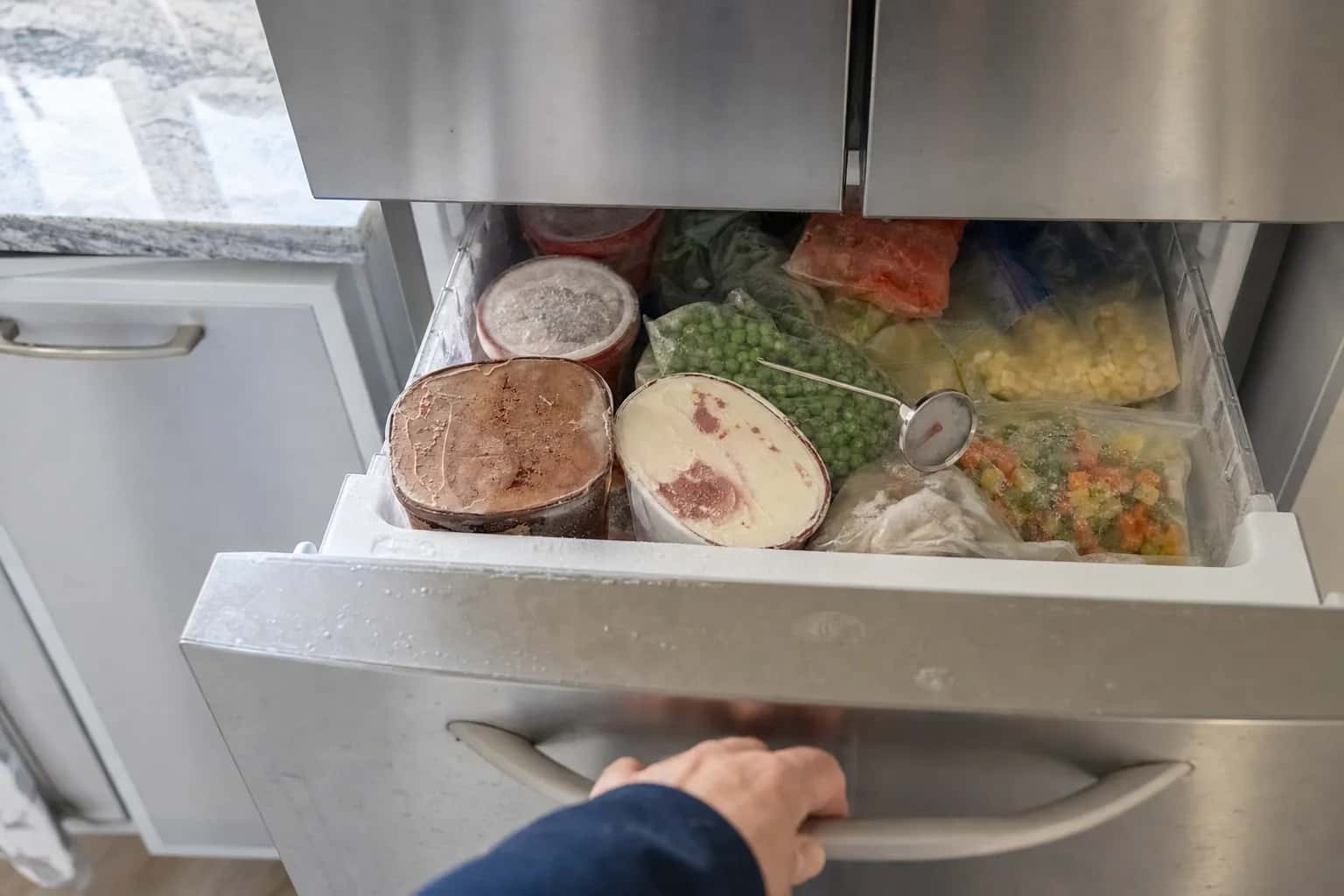
If your freezer is not freezing but the fridge is still cold, the refrigerator is still making cold; something is keeping it out of the freezer or letting warm air in. The usual causes are a door that is not sealing, a freezer packed so tightly that the air cannot move, or frost starting to build on the cooling coil, and several of those you can fix tonight. When those check out, the evaporator fan or the defrost system is the usual failed part.
Quick answer
| Symptom | Likely cause | Safe to check yourself? | Typical fix |
|---|---|---|---|
| Frost near the door, soft ice cream | Door not closing or a leaking gasket | Yes: dollar-bill test | Clear what blocks the door, clean or replace the gasket |
| Warm spots, food packed to the back wall | Blocked vents or a covered fan | Yes: unpack and clear the vents | Reorganize the freezer |
| Heavy frost on the back wall | Defrost heater, thermostat, sensor or control | Yes: look behind the baskets | Replace the failed defrost part |
| Freezer warm, a click, buzz or hum inside, or no fan sound | Evaporator fan motor | Yes: listen with the door closed | Replace the fan motor |
| Both sections slowly losing cold, compressor running hot | Dirty coils or a failed condenser fan | Partly: clean coils if your manual says to | Clean the coils or replace the fan |
First, check your food
Put an appliance thermometer in the freezer and keep the door shut as much as you can. According to USDA's Food Safety and Inspection Service:
- Food kept constantly at 0°F will always be safe; only its quality suffers with long storage.
- If the freezer fails or the door is left ajar, the food may still be safe to use if ice crystals remain.
- Food that is partly frozen, still has ice crystals, or is as cold as if it were in a refrigerator (40°F) is safe to refreeze or use.
- Throw out food that has been warmer than 40°F for more than 2 hours, and anything contaminated by raw meat juices. Soft or melted ice cream should go for quality's sake.
- A full freezer usually keeps food about 2 days with the door shut, and a half-full one about a day. The freezer section of a refrigerator may not keep food frozen as long.
While you wait for a repair, group packages together so they hold the cold, and keep meat and poultry apart from other food so thawing juices cannot drip onto it.
Checks you can do yourself
- Check the setting. The FDA says the freezer should be at 0°F. If someone turned it warmer, set it back and give it 24 hours before you judge the result.
- Look for Cooling Off mode. On Samsung models, OF OF, O FF or OFF OFF on the display means cooling has been switched off; Samsung's default freezer setting is -2°F. Other brands have a similar demo or showroom mode.
- Make sure the door closes. An ice bin, a tray, a bag or a basket that is not pushed all the way in can hold the door open a fraction of an inch. GE points to large items such as trays, platters and ice behind the ice bin as common reasons a door does not close.
- Test the gasket. Close the freezer door on a dollar bill or a sheet of paper, all the way around, and tug. If it slides out with no resistance, clean the gasket with warm soapy water and test again.
- Unpack the vents. Whirlpool warns that overpacking can cover the evaporator fan and block the airflow. Remove a few items and keep about 2 inches of space in front of the vents.
- Look at the back wall. Pull out the baskets or shelves. Heavy or uneven frost on the back panel points to a defrost problem.
- Listen for the freezer fan. With the door closed, you should hear air moving behind the back panel while the refrigerator runs. Fans and the compressor stop during a defrost cycle, which on GE models can last 30 to 45 minutes, so a quiet freezer is worth a second listen an hour later.
- Check the condenser coils. Unplug the refrigerator first. GE notes that most of its refrigerators built since 2001 have coils that do not need cleaning, so check your owner's manual. If yours does need it, a vacuum with a crevice attachment removes the dust.
- Give it 24 hours. After a setting change, an outage or a new installation, the temperature needs about a day to settle.
Freezer not cold but fridge is
In most refrigerators there is one cooling coil, behind the back wall of the freezer, and the fridge gets its cold air secondhand from the freezer. So when the freezer is warm and the fridge is fine, the cold is being made but is not staying in the freezer. Whirlpool's answer for this case is frost buildup or clogged venting, and door and gasket leaks belong on the list as well.
Some refrigerators use separate evaporators for the fridge and the freezer. On those, a freezer fan or defrost problem can leave the fridge side untouched.
Freezer not freezing but cold
A freezer can feel cold and still be too warm to freeze properly: ice cream turns soft, meat gives when you press it, and the thermometer sits well above 0°F. Work through checks 1 to 5 and 8 first. On an older model with a dial, Whirlpool suggests turning the thermostat from its lowest to its highest setting and listening for a click; no click points to the thermostat. If the freezer still will not reach 0°F a day later, a part is failing, most often the evaporator fan or the defrost system.
Which is it? A quick decision flow
- Is the fridge warm too? If both sides are warming, go to why is my fridge not cooling.
- Does the door pass the dollar-bill test everywhere? If not, fix the closure or the gasket first, then wait 24 hours.
- Is there heavy frost on the back wall? Yes points to the defrost system.
- No frost: do you hear the fan, and is it quiet and steady? Silence, or a loud click, buzz or hum, points to the evaporator fan.
- Fan and frost both look normal? Check the condenser coils and the fan at the bottom back. If the compressor runs constantly and the freezer still drifts above 0°F, it is time for a technician.
Why a freezer is not cold enough
The door seal, or a door left ajar
A torn, flattened or dirty seal, or a door that does not quite close, lets warm, humid air in. The freezer warms, and the moisture turns into frost. LG notes that slight openings around a freezer door can let in enough moisture to cause frost buildup.
Overpacking and blocked vents
The freezer fan pushes cold air out through vents. Bury them under bags of frozen vegetables and the cold stays near the coil while the food at the front warms.
The evaporator fan
Whirlpool says a faulty evaporator fan can make the freezer loudly click, buzz or hum, and that the freezer typically also struggles to stay cold. A fan slowed by a worn bearing may still turn but not move enough air. Our guide to fridge noises covers the sounds.
Early defrost problems
Every frost-free freezer melts the frost off its coil on a schedule. When a defrost heater, defrost thermostat, sensor or the control fails, frost keeps building. Whirlpool notes that ice freezing against the evaporator coils obstructs airflow in the freezer, and that a freezer accumulating ice quickly should be checked by a professional. A defrost failure often shows up first as a warm fridge, which we cover in refrigerator not cooling but freezer works. The same failure can freeze the drain and leave water in the fridge.
If you cannot get a technician right away, a manual defrost buys time. LG's steps: unplug the refrigerator, remove the food and ice, leave the doors open at least 8 hours with towels in and around it, dry it, then plug it back in and allow 24 to 48 hours.
Do not use a hair dryer, a heat gun or anything sharp to speed it up; Samsung warns that a hair dryer will damage the refrigerator. The frost returns until the failed part is replaced, so this is a good time to line up freezer and refrigerator repair in Atlanta.
Condenser coils and the condenser fan
The condenser is where the refrigerator sheds its heat. Whirlpool notes that dirt on the condenser coils weakens the cooling, and a failed condenser fan does the same, so on a hot day the freezer may stop holding 0°F.
When both the fridge and freezer are warm
If both sides are warming, the problem is the part that makes the cold: the compressor, its start relay, the condenser fan or the control. Our guide to a fridge that is not cooling covers that case.
What usually fails
- Evaporator fan motor. A warm freezer, often with a click, buzz or hum, or a silent back panel.
- Defrost heater, thermostat or sensor. Frost building on the back wall.
- Door gasket. Frost near the door and a seal that fails the bill test.
- Condenser fan motor. A warm freezer and a compressor running hot.
- Thermistor or control. Temperatures that do not match the setting.
- Sealed system. The least common cause and the most expensive. Under EPA rules, technicians who service equipment that could release refrigerant must be Section 608 certified.
What it costs in Atlanta
The diagnostic visit is $80, and it is waived when you approve the repair. Repairs start at $180 labor plus parts, quoted in writing before any work begins. On standard brands, most refrigerator repairs run $250 to $500 in total; see the typical totals on our pricing page. Fans, gaskets and defrost parts sit at the lower end; sealed-system work costs the most, and our repair-or-replace guide helps you decide before anything is done. Every repair carries our 60-day parts-and-labor warranty.
Schedule a visit or read about our refrigerator repair service. Prefer to talk? Call (470) 778-4087.
Sources
- USDA FSIS: Freezing and Food Safety
- Whirlpool: 7 Freezer Problems and How to Help Fix Them
- Whirlpool: What to Do If Your Freezer Is Not Freezing
- Samsung: Cooling issues with Samsung refrigerator or freezer
- GE Appliances: Refrigerator - Not Cooling Enough
- LG: Refrigerator Frost Buildup
How we write and check these guides: editorial policy. Spot an error? Email hello@atlantaappliancetechs.com.
About Atlanta Appliance Techs
Atlanta Appliance Techs is a locally owned appliance repair company serving Metro Atlanta, including refrigerator repair in Atlanta. $80 diagnostic waived with the repair, 60-day parts-and-labor warranty, and gas, electric and induction appliances. More about us.