Refrigerators
Refrigerator Keeps Tripping the Breaker or GFCI?
Refrigerator keeps tripping the breaker or a garage GFCI? Safe checks to try, why defrost heaters and moisture trip GFCIs, and when to call an electrician.
By Atlanta Appliance Techs · Published · Updated · 6 min read
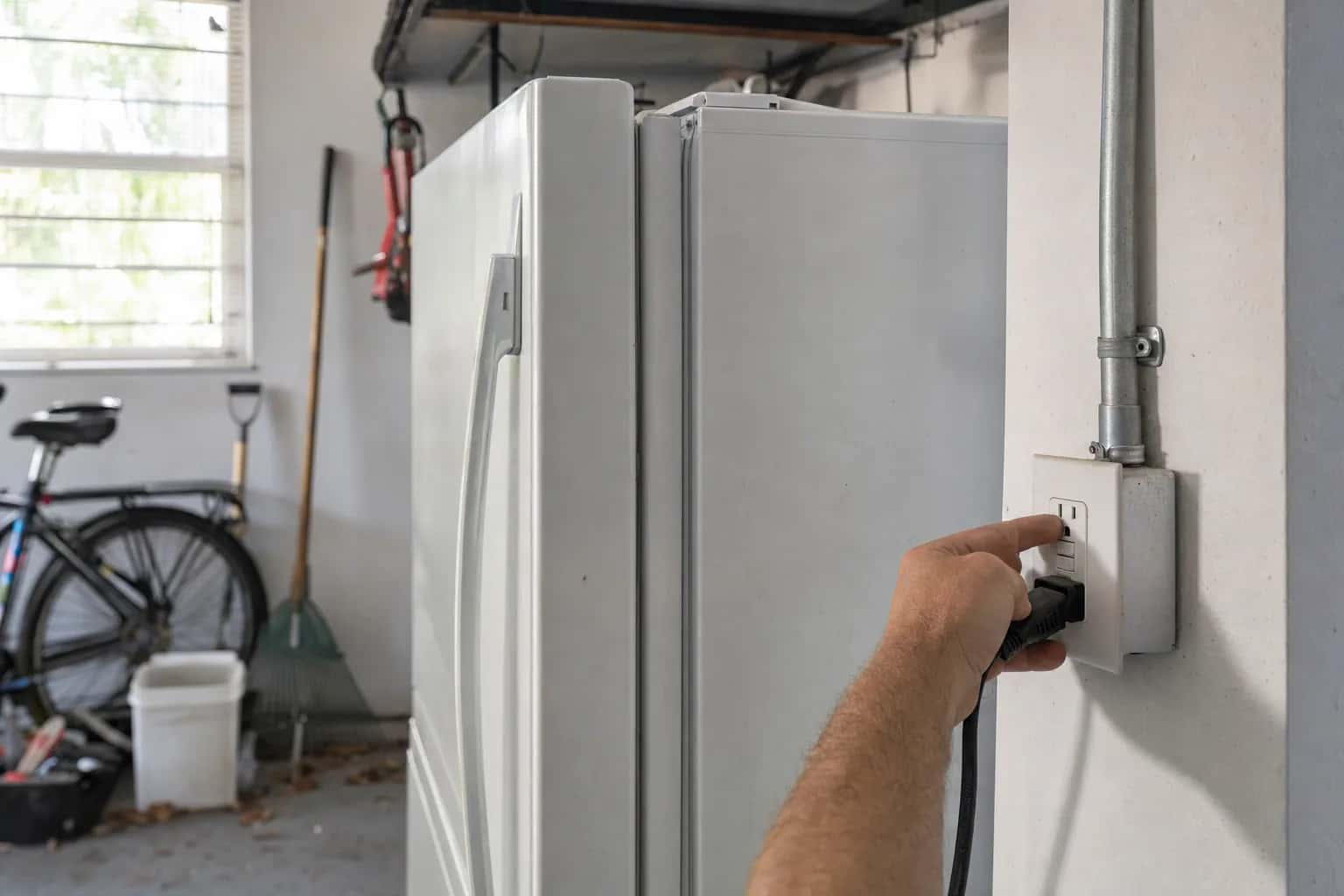
If your refrigerator keeps tripping the breaker or a GFCI outlet, either the circuit is overloaded or something in the refrigerator has an electrical fault, such as a heater, motor or wire leaking current to ground. The breaker and the GFCI are doing their jobs, so the goal is to find the fault, not to keep resetting them. A few safe checks tell you whether the problem is in the refrigerator or in the house wiring, and that tells you whether to call an appliance technician or a licensed electrician.
Safety first. Never remove or bypass GFCI protection, and never swap a GFCI for a regular outlet to keep a refrigerator running; that protection is what stands between a leaking appliance and a serious shock. If the outlet or the plug is warm, discolored, scorched or wet, or you see sparks or smell burning, leave it unplugged and call. Wiring, outlet and circuit changes are for a licensed electrician.
Refrigerator keeps tripping the breaker: checks you can do yourself
- Reset it once. Switch the breaker fully off and back on, or press the reset button on the GFCI. If it trips again right away, stop resetting.
- Find the GFCI that tripped. A GFCI outlet also protects the outlets wired after it, so the refrigerator's outlet may be protected by a GFCI somewhere else, such as another outlet in the garage. If the fridge's own outlet has no test and reset buttons, look for a tripped GFCI nearby.
- Take other loads off the circuit. A second freezer, a shop vacuum or a space heater on the same circuit can overload it.
- Plug straight into the wall. No extension cords and no power strips; more on that below.
- Check the cord and plug. Look for cuts, crushing or burn marks. Do not plug a damaged cord back in.
- Separate the refrigerator from the house. Unplug the refrigerator and reset the breaker. If it trips again with the refrigerator unplugged, the fault is in the house wiring, the outlet or the breaker, and you need an electrician. If it holds until the refrigerator is plugged back in, the fault is most likely in the refrigerator.
- Note when it trips: as the compressor kicks on, every several hours, or only when something else runs. That timing is the best clue you can give a technician.
Why a refrigerator trips a GFCI
A GFCI works differently from a breaker. A GFCI compares the current flowing out on a circuit with the current coming back, and cuts the power within a fraction of a second when even a small amount goes missing, which usually means it is leaking to ground, possibly through a person. A breaker trips when the circuit carries too much current overall. So a refrigerator that trips a GFCI but not a breaker usually has a small leak of current to ground somewhere.
The usual sources:
- The defrost heater. Frost-free refrigerators run a heater on a schedule to melt frost off the cooling coil; GE says its timed defrost starts every 8 to 15 hours depending on the model. A damaged heater can leak current only while it is on, so the GFCI trips on a schedule and the refrigerator seems fine in between.
- Moisture. Water from a clogged defrost drain, an overflowing drain pan or condensation can reach wiring and connectors under the refrigerator. If you also see water, read why is my fridge leaking water.
- The compressor or a fan motor. Worn insulation in a motor can leak current, and a failing compressor can draw enough when it starts to trip a breaker.
- A damaged cord or wiring harness. Wires can chafe or get pinched behind and under the refrigerator.
- The GFCI itself. A GFCI outlet can fail too. If it will not reset, or trips with nothing plugged into it or the outlets it protects, have an electrician check it.
A garage refrigerator on a GFCI
A second refrigerator in the garage often ends up on a GFCI outlet, in a space with summer heat, humidity that condenses on cold surfaces, dust and sometimes a damp floor. Damp conditions are hard on connectors and wiring, and the fix is never to remove the protection. Garages are also hard on the refrigerator itself; Whirlpool notes that an indoor refrigerator installed in a garage may not cool properly, because garages lack the controlled climate of a home.
Whether a particular outlet needs GFCI protection, or whether the refrigerator should have its own circuit, is a question for a licensed electrician. Your refrigerator's installation instructions list the electrical supply and outlet it needs. Our Atlanta humidity maintenance checklist covers garage refrigerators, too.
Breaker or GFCI: what the pattern tells you
- The breaker trips as the compressor starts: a compressor, start relay or overload problem, or a circuit that is already heavily loaded. Whirlpool lists a circuit breaker that keeps tripping among the red flags for a failing compressor.
- The GFCI trips every several hours: points toward the defrost heater or moisture.
- It trips only when the microwave, a space heater or a tool runs: an overloaded circuit.
- It trips with the refrigerator unplugged: the house wiring, the outlet or the breaker itself. Call an electrician.
If the breaker trips only when the refrigerator is running, stop using the refrigerator and have it checked; resetting a breaker over and over on a faulted appliance is how wiring overheats.
Why not an extension cord?
The U.S. Fire Administration says to plug major appliances, refrigerators included, directly into a wall outlet and never to use an extension cord with one, because the cord can overheat and start a fire. Running a cord to a different outlet does not fix a tripping problem anyway; it only moves it.
Keep your food safe while it's off
According to the USDA, a refrigerator keeps food safe for up to 4 hours if the door stays closed, and a full freezer holds its temperature for about 48 hours (24 hours if it is half full). If the refrigerator will be off longer, move perishables to a cooler with ice. Refrigerated perishables such as meat, poultry, fish, eggs and leftovers should be discarded after 4 hours without power. Our guide to a fridge that is not cooling covers what to do next.
What usually fails
- Defrost heater. A GFCI that trips on a schedule, often with frost building on the freezer's back wall.
- Compressor or its start relay. A breaker that trips, or a click every few minutes, as the compressor tries to start. GE's service site points to the start relay and the condenser fan when a warm refrigerator clicks on and off at short intervals. We test the relay and the compressor before recommending anything, because the relay costs far less.
- Condenser or evaporator fan motor. A motor with damaged windings or wet connections.
- Wiring harness, connector or power cord. Chafed, pinched or wet wiring.
When the house wiring checks out and the refrigerator is the problem, call in a refrigerator technician to find the electrical fault with a meter rather than swapping parts.
What it costs in Atlanta
The diagnostic visit is $80, and it is waived when you approve the repair. Repairs start at $180 labor plus parts, with a written flat-rate estimate before any work begins. On standard brands, most refrigerator repairs run $250 to $500 in total, and defrost parts and relays sit at the low end; see the typical totals on our pricing page. Compressor work is rarely worth it on an older refrigerator; our repair-or-replace guide explains why. If the fault is in the house wiring, we will tell you, and that part is for a licensed electrician. Every repair carries our 60-day parts-and-labor warranty.
Schedule a visit or read about our refrigerator repair service. Prefer to talk? Call (470) 778-4087.
Sources
- U.S. Fire Administration: Appliance and Electrical Fire Safety
- GE Appliances: Refrigerator - Automatic Defrost System
- GE Appliances Factory Service: Why does my fridge keep clicking on and off?
- Whirlpool: Why Is My Refrigerator Not Cooling? 7 Possible Causes and Fixes
- USDA FSIS: Keep Your Food Safe During Emergencies
How we write and check these guides: editorial policy. Spot an error? Email hello@atlantaappliancetechs.com.
About Atlanta Appliance Techs
Atlanta Appliance Techs is a locally owned appliance repair company serving Metro Atlanta, including refrigerator repair in Atlanta. $80 diagnostic waived with the repair, 60-day parts-and-labor warranty, and gas, electric and induction appliances. More about us.